Day 03: Delhi / Ahemdabad (9W 2064
1220 / 1345 Hrs) Ahmedabad / Dasada (90 Kms)
After breakfast, transfer to the airport to board your flight to Ahmedabad
Meeting and assistance upon arrival in Ahmedabad and drive 90 kms to Dasada
Upon arrival, check into The Rann Riders Resort. The resort is simply a
magnificient tranquil oasis. Accommodations are in well appointed
independent cottages spread throughout. The rooms are fairly spacious and
are constructed with locally found materials to look like a traditional
village. Built in the style of the Kooba houses of the Bajania community and
the Bhunga houses of the Kutchi Rabaris, these thatch roof cottages are
decorated with mirrors, mud plaster work and embroideries. Spread over 5
acres, you would love a wander through beautiful surroundings, apart from
indulging in a very rewarding ornithological experience. A variety of birds
are witnessed in the resort itself.
Overnight at Rann Riders (Deluxe Cottage)
Day 04: Dasada

Wake up to the sounds of the chirping birds and the fragrance of a variety
of flowers that surround the cottages.
Following breakfast we proceed on an excursion back in time as we embark
upon a village safari of the pastoral settlements and villages along the
Rann of Kutch. We visit the rural Vadiara and Kharapat Rabari tribals of
Dasada. The tribals here are known for their embroideries and silk-weaving.
We would also visit the local villages of the Bharward shepherds and
goatherds. The weaving cooperative at Bajana and other artisans
workshops can also be included in the tours. Other societies near Dasada are
Padhars (primarily fishing people), the Siddis and the semi-nomadic Mirs,
Jaths (Muslim herders), Bajanias.
The idea of the safari is to bring to you the opportunity to experience
distincvtive traditional lifestyle, colour and of course hospitality as
manifested in the manner the natives deal with you.. Actually, during this
tour, one can shop for embroidery directly from the Bharwad women of Ambala
and the Rabari women of Dasada.
Afternoon, we proceed on a cross-desert safari across the Little Rann of
Kutch, where the last of the Indian Wild Ass has been given protection in a
dedicated sanctuary. The animal is not found elsewhere. The wild ass is a
handsome chestnut brown member of the equus genus (horse family). Capable of
reaching high speeds when galloping across the Rann, the wild ass is usually
seen in small herds.
The Rann is a fascinating terrain essentially the shallow bed of the
sea that drains out in the dry months and gets flooded during the monsoon by
the sea surging inland on the one hand and the seasonal streams in monsoon
flood bringing in fresh water on the other. This mix of salt and sweet water
provides ideal conditions for the prolific growth of crustaceans and other
aquatic food for the flamingoes and other birds that breed and winter here
in enormous numbers. Apart from the Wild Ass the Little Rann is also the
home for a wide variety of species that include chinkara gazelle, nilgai,
and the blackbuck antelope,
The main carnivores of the Little Rann of Kutch are the endangered Indian
wolf, desert fox, Indian fox, jackals, desert and jungle cats, and a few
hyenas.
Smaller mammals like hares, gerbilles and hedgehogs, and reptiles like
spiny tailed lizard, monitor, red and common sand boa, saw-scaled viper,
cobra, dhaman (Indian rat snake), etc, could also be seen during the safaris
in the Rann.
The Little Rann of Kutch is a birdwatcher's paradise in winter. Houbara
bustard, sandgrouse, desert chat, desert wheatear, nine species of larks,
quails, gray francolin etc are seen in the saline desert wilderness. Eagles,
vultures, harriers and falcons can be seen hunting in the Rann.
Overnight at Rann Riders (Deluxe Cottage)
Day 05: Dasada / Ahmedabad (90 Kms)
Following breakfast, we will drive to Ahmedabad.
Upon arrival, check into Hotel Sarovar Portico
Afternoon, we proceed on a tour of the city. A major attraction here is the
Jama Mosque. This congregational mosque was built in 1423 in yellow
sandstone the building combines the best of Hindu and Muslim styles of
architecture, standing on 260 pillars supporting 15 domes at varying
elevations, and, is described as the most beautiful mosque in India.
From here we continue our tour to visit the Adalaj step well built in 1499
A.D.. The designs on its walls and pillars include leaves, flowers, birds,
fish and other breathtaking ornamental designs. The five-storied, step-well
is a marvel of architecture. The intricately carved monument served
religious and utilitarian purposes of the people around though its origin is
marred by tragedy.
Another attraction of Ahmedabad is the Satyagraha Ashram, set-up in AD 1920
on the lull western banks of the Sabarmati River. This is the place
associated with Mahatma Gandhi and was an important center of Indias
freedom struggle.
Finally, we will also find time to explore some of the bustling bazaars and
crafts of the city.
Day 06: Ahmedabad / Dungarpur (150
Kms) (02 Hrs Drive)

Meeting & assistance upon arrival at Ahmedabad station and drive to
Dungarpur
Upon arrival check into the Udai Bilas Palace
The history of Udai Bilas Palace, Dungarpur, Rajasthan dates from the
mid-19th century, when Maharawal Udai Singhji-II, a great patron of art and
architecture built a wing of bluish grey local stone " Pareva"
overlooking the lake and the " Ek Thambia Mahal," featuring
intricate sculptured pillars and panels, ornate balconies, balustrades,
bracketed windows, arches and frieze of marble carvings, a veritable marvel
of Rajput architecture. The Udai Bilas Palace was enlarged in 1940 by
Maharawal Laxman Singhji, who built three new wings around the Ek
Thambia Mahal" (Literally one- pillared Palace) and thus created the
famous " courtyard of the palace. The result is an architectural
expression exquisitely detailed. Still the royal residence, the Palace
offers accommodation in the houseguest tradition with seventeen spacious and
lavishly appointed bedrooms. No two rooms are alike; each room enchants with
its own personality, spaciousness and modern comforts and offers a unique
experience. The Furnishings are mostly from the 20th century art-deco style,
marble bathrooms with English fixtures and running hot and cold water. Meals
are served either in the banquet hall, which displays crystal chandeliers,
or in the more intimate family dining room. Continental or Chinese dishes
are also served.
Overnight at Udaibilas Palace - Heritage Hotel (Standard
Room)
Day 07: Dungarpur

The
district is the stronghold of Bheels, a tribe whose history of occupancy in
the Aravalli Range is said to date back to 4000 B.C. They are one of the
oldest and most primitive tribes of the world. This morning we will visit
some of these unspoiled Bheel hamlets in and around the town. We will
witness and photograph age-old tribal lifestyles and customs handed down
over the centuries. You would have an opportunity to meet villagers who have
never seen white people!! Say hello to people, allow them to get used to you
and then, you may go ahead with your pictures. You would soon end up as the
pied piper followed by scores of noisy and happy children!!!
We return to our hotel by mid morning to enjoy the destination at leisure.
Udai Bilas Palace is a round-the-year paradise for bird watchers.
The cooler months from mid October to February are the best to see winter
migratory birds when birds can be observed in attractive plumage. One can
see from the Palace itself at remarkably close range egrets, night and pond
herons, white necked and painted storks, coots and winter or resident ducks
among others, depending on the season of your visit. Birds are also
plentiful in the surrounding woodlands where one can hope to see the Grey
Hornbill, Gray Partridge, Green Pigeon, Peafowl, Peacocks, Paradise
flycatcher and the Golden backed woodpecker, to name a few representative
species. You may proceed on a leisurely walk around the lake or heir boat
for a special boat trip on the lake as well as a gentle trek through the
forests so that the nature lover in you is able to enjoy the beauty of the
place and are able to get a close look at the bird life.
Late afternoon we visit the ancient fortified ruins of the Old Fort.
Besides fine panoramic view of the ancient town of Dungarpur the fort has
well preserved examples of natural colour paintings and incredible art and
architecture.
Overnight at Udaibilas Palace - Heritage Hotel (Standard
Room)
Day 08: Dungarpur / Udaipur (120 Kms) (02 ½ Hrs drive)
Following breakfast we will drive to Udaipur
Welcome to Udaipur, the famed City of sunrise Founded in 1567
by Maharana Udai Singh, from the lineage of the legendary Sisodias of Mewar
- the decedents of the sun God. A city where the sun truly never set, where
tradition and a strict code of heroism were happily united with a love of
fine living. A city that has come to be an oasis of romance in the warrior
state of Rajasthan
Upon arrival, check into your hotel Jagat Niwas Palace, a modern heritage
hotel replete with character and charm, besides all comforts discerning
tourists would seek.
Afternoon is at leisure to enjoy this amazingly beautiful city. We suggest
independent walks along the tranquil lake or a visit to the bustling bazaar
of the old city. Udaipur has wares on offer that can convert the most
unwilling of shoppers into avid buyers. The better known items include folk
toys, brightly colored garments, hand printed textiles, batiks, dyed saris,
metal images, silver jewelry, and the Pichwal wall hangings.
Evening we enjoy a boat cruise on the serene and beautiful Lake Pichola.
The island palace on the Lake called Jagmandir Palace is quite fascinating.
The Palace provided inspirations and ideas to the builder of the Taj Mahal.
The banks of the lake provide interesting glimpses of the daily bathing and
the laundry that takes place here. Looking across the lake, with the city
and its great palace rising up behind the island palace, is a scene of rare
beauty.
Overnight at Jagat Niwas Palace (Raj Room)
Day 09: Udaipur

Following breakfast, we proceed on a tour of this "Lake City".
Udaipur is a cool oasis in the dry heart of Rajasthan. It is probably the
most romantic city in a state where every city has some romantic or exotic
tale to tell. The huge city palace towering over the Lake Pichola is the
largest palace complex in Rajasthan. Though it is a conglomeration of
buildings built by successive rulers, it manages to retain a surprising
uniformity of design and affords very fine view of the lake and the city
from the upper terraces. The Jagadish temple next to the city palace
enshrines a black stone image of Lord Vishnu and his vehicle- a mighty bird
called garuda - in a brass image. The temple is a very fine example of
Indo-Aryan Art.
Rest of the day, we explore the bustling bylanes of Udaipur which have
artisans practicing their traditional crafts handed down to them by their
elders. Khari printers do decorative floral patterns in gold and silver on
plain or printed fabric. Block printers print various designs and patterns
in different colours with the help of wooden blocks. Youll also find
artisans carving furniture, making puppets and traditional wooden toys.
Along with engraving and embossing on brass, silver, jewellery, copper and
even pottery, Meenakari is a specialty of this region. Udaipur also
specializes in stone carving, especially in marble and sandstone, with
artisans working hard at chiseling their finest filigree work. Colour as
usual plays an important role in the life of Udaipur as in Rajasthan. It is
wonderfully evident in ghagharas (long flowing skirts), cholis (blouses),
and odhnis (long scarves) of the women as well as the turbans of the men.
Overnight at Jagat Niwas Palace (Raj Room)
Day 10: Udaipur / Ranakpur / Kumbalgarh (98 Kms) (02 Hrs drive)

Following breakfast we ride out to Kumbalgarh. Enroute we visit Ranakpur.
The Ranakpur Jain Temple was built during the reign of the liberal and
gifted monarch Rana Kumbha in the 15th century. The basement is of 48, 000
sq. feet area that covers the whole complex. There are four subsidiary
shrines, twenty-four pillared halls and eligibly domes supported by over
four hundred columns. The total number of columns is 1,444 all of which are
intricately carved with no two being alike. The artistically carved nymphs
playing the flute in various dance postures at a height of 45 feet are an
engrossing sight. In the assembly hall, there are two big bells weighing 108
kg whose sound echoes in the entire complex. The main temple is of Chaumukh
or four-faces temple dedicated to Adinath.
After the tour of Ranakpur Jain Temples we continue our ride to Kumbalgarh.
We would have photo stop several times as we walk through the countryside as
well as interact with primitive tribals.

Upon
arrival we check into the fine Aodhi Lodge - a property of the Royal family
of Udaipur. Afternoon, we explore the beautifully preserved and one of the
most majestic forts of India. 13 mountain peaks surround the impregnable
fortress of Kumbalgarh (54 Kms) at a height of 3281 ft. Seven towering
gateways pierce the massive walls of this prominent fortress of Mewar. The
young Udai Singh founder of Udaipur took shelter here from his treacherous
uncles. These impregnable walls dotted with cannonballs defeated Emperor
Akbar.
Overnight at Aodhi Lodge (Deluxe Room)
Day 11: Kumbalagarh / Deogarh (85 Kms) (02 Hrs Drive)

Morning
we will drive to Deogarh
Upon arrival check in to Deogarh Mahal
Afternoon escorted walks through the primitive town to witness traditional
styles of living and occupation.
Following the walk, we reach
Seeng Sagar for high tea. Fort
Seeng Sagar is a magical and awe-inspiring island fortress sitting in the
middle of a lake within a dramatic rocky landscape. It is fully-staffed and
everything is of the highest quality. The small pond in the central
courtyard becomes a cosy fire to sit around during winter. As well as a
dining and sitting area under cover there is a superb, open-air terrace
which overlooks the lake.
Evening, drive back 4 kms to Deogarh Mahal for overnight
Overnight at Deogarh Mahal (Deluxe Room)
Day 12: Deogarh (Primitive Train Ride through Fascinating Villages)

Following
breakfast we embark upon a unique experience
a 19 km
train ride between two villages. We will go native today, and travel
with the villagers through exceedingly fascinating countryside and
landscapes.
The track passes through a breath taking scenery of Ravli Sanctuary, with
100 feet high bridges, two long tunnels, waterfalls, thick jungle, and above
all an unchanged ambience of a bygone era. The track is cut on a cliff side
and one comes down by almost one thousand feet. All along one can only
appreciate the Herculean effort by the engineers in 1928.
The safety devices are most amusing. At one place the driver has to get
down physically to change the track (when gong down).
We ride on a meter gauge local train, having wooden sleepers, accompanying
villagers traveling to Marwar. One travels through a ghat section and
descends 1200 feet to Phulad Railway Station. Enroute we stop at GoramGhat
flag station where monkeys descend from nabouring scrub jungle to feed on
articles given by the villages. Your car awaits you at Phulad 19 Km away
that brings you back to Deogarh Mahal.
Afternoon is at leisure to enjoy your spectacular property
Overnight at Deogarh Mahal (Deluxe Room)
Day 13: Deogarh / Narlai (105 Kms) (02 ½ Hrs drive)

After
breakfast we will drive to Narlai. We would have opportunities to stop a few
times for interactions with the extremely friendly tribals as well as
witness their homes and lifestyles unchanged for centuries.
Upon arrival check in to the Hotel Rawla Narlai Situated in the Narlai
village, Rawla Narlai, is a 17th century fortress renovated over the years
to have 15 exquisite double rooms. Rawla Narlai is full of surprises; it is
situated in the heart of a typical Rajasthani village bustling with activity
and bursting with colours. But, inside the Rawla (fortress) there is only
serenity and stupendous view of a gigantic350 ft single rock of granite
dotted with caves and temples and crowned by a statue of a white elephant -
proud guardian to the open desert on one side and the crumbling Aravali
hills on the other. Maharaja and Rani Swaroop Singh, and their sons oversaw
the careful restoration of this hunting lodge, with aesthetics, comfort, and
atmosphere that will embrace your senses. Comfortable rooms and modern
bathrooms blend with the ancient way of Narlai, while offering a warm and
homely atmosphere. The charming rooms are all stylised from references from
the past adding more to your experience at Rawla Narlai. The chef prepares
you a delicious meal, garnished with care made from Secret Recipes handed
down for generations to the Royal family. In the evening bathe in the
moonlight under the starry sky, listening to hypnotic and chanting rhythms
by local musicians who will rekindle the sprit in you. The peace and calm of
the gentle rustling leaves, the sun bathed courtyards and the star lit nights
ads an air of romanticism to this wonderful fortress.
The village of Narlai is one of the most exquisite well-preserved tribal
settlements of India. You would find your walk through the maze of lanes and
bye lanes and incredible experience. You need to come back to your fortress
by late afternoon, to enjoy the magical sunset as well as the ethnic décor
and charm of your amazing hotel.
Overnight at Rawla Narlai (Heritage Room)
Day 14: Narlai / Jalore (100 Kms) (02 Hrs Drive)

Wake
up to the sounds of this 17-century village, and take in the spiritual
energy from descending from the Shiva Temple, deep in a primal cave, on the
hill overlooking your room. You may hear whispers of the early morning
chanting coming from the many temples and mosques. At breakfast you are
encouraged to feed the harmless monkeys, if they come down from the hills,
as a token of prayer to Lord Hanuman.
After breakfast, we will drive to Jalore.
Upon arrival, check into Ravla Bhenswara (www.hotelravlabhenswara.com ).
The RAVLA (Castle) or manor was built about 240 years ago. Built in typical
Rajput architectural style, this Ravla has refurbished to the taste of the
residing Thakurs (feudal lords) of Bhenswara. In the early 1940s the
Late. Th. Madho Singh Ji, added modern comforts to his ancestral residence,
which has enabled his successors to convert it into a heritage hotel, which
now is run personally by his grandson, Kunwar Shiv Pratap Singh
and his wife Uma Kunwar.
Each visitor to this aristocratic house is the current nobilitys
personal and esteemed guest. The Ravla has 26 well appointed Rooms / Suites
with traditional décor in different Rajasthan themes.
The local village surrounding the Manor house has stood frozen in time. It
would be fascinating to walk and explore the village and transporting
ourselves back in time to witness traditional homes, occupations, beliefs
and crafts. We recommend a walk through the village this afternoon, or
suggest just take in the luxury and charm of your unique regal home.
The food at Rohetgarh is special; each recipe is both traditional and
typical, handed down the generations and jealously guarded to retain its
pristine flavours. You savour only the very best of Rajasthani cuisines,
food favoured by the Royalty. The 16th century descendants of the Rathore
ruling family still live here and host the guests. The members of the Royal
family interact with the guests and interesting stories and anecdotes are
narrated.
Overnight at Ravla Bhenswara (Deluxe Room)
Day 15: Jalore

Morning
at leisure for independent walks. And explorations.
Afternoon, we step off the beaten tracks on land rovers to explore
Rajasthan in its rural and rustic best. We drive across the treacherous
river Javai only to reach the snake god temple a shrine that holds
great awe amongst the local population. We witness the ritualistic devotion
of the locals here and notice the colour and spirituality too. Sitting right
opposite the temple is a man in a trance sucking venom out of the snake
bitten villagers with his bare mouth! Every thread tied on the neighbouring
holy tree is symbol of every life saved in this holy temple!
From here we walk through the narrow lanes and alleys of the village to
witness the traditional life of these closely knit village where each home
is beautifully made and decorated by hand. We have a chance to interact with
the locals and also step into their homes.
We hop on to our jeep as our safari traverses dust trails accompanied by
herds of cattle herded by the shepherds to the center of the village. Here
we witness tribal women laden with traditional jewelry balancing clay pots
on their head . The pots are to fetch water from the central well of the
village.
We would also spend time walking through the village and absorb the vibrant
colors and the diversity of lifestyles - women milking cows, men in their
different colored turbans smoking "Hubble - Bubble" and clay
pipes, shepherds gathering their sheep, and the everyday activities of that
village. More than anything else, it would be the hospitality with which
that they deal with you that would really touch you. They want to know you
and thank you for visiting their part of the world which has been overlooked
by time.
Later, drive back to Ravla Bhenswar
Overnight at Ravla Bhenswara (Deluxe Room)
Day 16: Jalore / Rohet (60 Kms) (01 ½ Hrs Drive)

After
breakfast we will drive to Rohet.
Upon arrival check in to the Rohetgarh Fort
At Rohet, one is transported in to a world of the past, a world of honour
and of chivalry, of glory and of pride; a world of vibrant colours and
spectacular magnificence. Past centuries come to life at the historic
boundary walls of Rohet- the 16th century fortified deserted home of a
Rajput clan. Within the precincts of these time weathered walls is our
hotel, the impressive Rohetgarh Fort- a bastion of proud Rajput traditions
bathed in the ambience of unmistakable Rajasthani culture where one can,
even today experience the famed warm and courteous Rajput hospitality.
Frescoes on the tall gateway, brightly painted in the traditional style,
using traditional motifs and colour schemes herald your entry to this
charmed world the bygone era. The gateway leads to a compound where a
profusion of flowers frame the archways in welcome. The portico is a warm
and informal place decorated with the artifacts and trophies of many years.
Exquisitely carved furniture, delicate hand block prints, original paintings
and photographs decorate your rooms, which though redolent with the romance
of a bygone era, provide all the modern amenities. Antique hunting riffles,
shields & spearheads, daggers and original paintings form the backdrop
of the dinning room. The swimming pool here is in beautiful settings and is
an oasis in a dessert.

The food at Rohetgarh is special; each recipe is both traditional and
typical, handed down the generations and jealously guarded to retain its
pristine flavours. You savour only the very best of Rajasthani cuisines,
food favoured by the Royalty. The 16th century descendants of the Rathore
ruling family still live here and host the guests. The members of the Royal
family interact with the guests and interesting stories and anecdotes are
narrated.
As evening descends upon our hotel, the darkness of the night is lit up by
the flickering flames of fire around which the rhythmic movements of the
folk dancers assumes shape in brilliant colours; truly an electrifying
experience.
Overnight at Rohetgarh - Heritage Property (Super Deluxe
Room)
Day 17: Rohet / Jodhpur (40 Kms) (01 Hr Drive)

Morning,
we enjoy jeep safaris to visit the heart of Rajasthan villages where
tradition centuries old still permeate life styles. One can witness the opium
ceremony - a ritual by which guests are welcomed. Gaily attired men
and women carry on their chores and one can catch a glimpse of their norms
and customs. The smoothened mud floors of the village huts remind one of the
simple and traditional living here.
After breakfast we will drive to Jodhpur
Upon arrival, check into hotel Ratan Vilas. Built in 1920, by Maharaj Ratan
Singhji of Raoti who was a keen horse lover and one of the greatest polo
players of his time, Ratan Vilas with its imposing but delicately carved
exterior and simple yet comfortable interiors, is a genuine heritage edifice
in a sylvan setting.
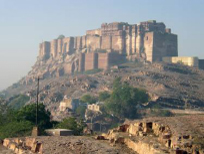
Afternoon, proceed on a guided tour of Jodhpur. Our tour includes the
massive fort. In olden days this must have been impregnable since its rocky
base is scraped straight down making it nearly impossible to ascend. Once
inside, royal palaces abound with fascinating history and priceless jewels,
on to the armoury and Jaswant Tara - the Royal Crematorium.
Evening, we would ride horse carriages to the Clock Tower Bazaar. This is
one of Indias largest and most colourful wholesale markets especially
with respect to clothes, fabrics, spices, vegetables etc. It is a fantastic
experience to walk through the place observing and photographing this
incredible spectacle of vibrant lifestyles and incredible colours.
Overnight at Ratan Vilas (Superior Room)
Day 18: Jodhpur / Jaipur (Intercity Express 0555 / 1040 Hrs)

Early
morning transfer to train station to board your train to Jaipur
Meeting & assistance upon arrival in Jaipur & transfer you to Naila
Bagh Palace. The Palace stands tall within a 21000 sq feet area; you will be
welcomed within its folds by a serene and tranquil environment. The palace
is surrounded by various courtyards and gardens on all sides where you may
find beautiful peacock's walking about aimlessly or dancing. Walk through
the beautiful Mahal (main hall) and get transported back to a time of
beauty, history and opulence. Ornate frescos and majestic portraits of
Maharajas and Princesses from the bygone era adorn the walls; colonial
furniture surrounds you in majestic charm.
After rest and relaxation, we will explore the unending shopping options of
Jaipur along with our Guide. An essential starting point for Rajasthan
craftwork is block making and block printing and we will be exploring the
process from start to finish in some of the popular stores here. The
opportunity also exists here to tailor make outfits to your design and size.
We also explore one of the chief attractions of Jaipur - its jewelry, which
offers a variety that ranges from chunky tribal jewelry to enameled gold to
modern diamond jewelry. Kundan (art of stone setting) and enamel jewelry has
been a specialty of Rajasthan, particularly that of Jaipur. The stones are
embossed into decorative shapes & patterns and embellished with delicate
enamel ornamentation in the champeve (raised field) technique. Jaipur is
well known for its gold and silver enameling. Colorful bangles made of lac
and set with semiprecious stones make an inexpensive buy. The craftsmen take
great pains to embed the hundreds of stones into the lac. The skilled
gem-cutters of Jaipur carve enchanting little animals and birds from rock,
crystal, jade, smoky topaz and amethyst. Intaglio beads & buttons and
crystal scent bottles are also available.
Overnight at Naila Bagh Palace (Royal Room)
Day 19: Jaipur

Morning
we visit Amber Fort, the former capital of the royal Jaipurs. Few fail to be
moved by the dramatic Rajput grandeur of this hilltop fortress-palace 11 km
north of Jaipur. Set on the dry wrinkled Aravali Hills, and surrounded by
fortified battlements, the palace straddles two sepia-hued tundra hills
overlooking Maota Lake, and its sprawling crenellated walls lattice the
surrounding hills.
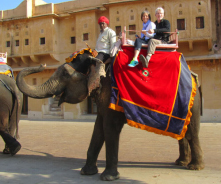
We will ride up to this hilltop palace on a caparisoned, painted elephant,
passing through the ancient main gate where Maharajas of Jaipur have entered
for four hundred years. Our guide will elaborate on the history of this
architectural masterpiece with its mirror-studded alcoves, dazzling mosaics
and water-cooled swings that delight todays visitors as they did their
former royal residents.

We
shall visit the Hawa Mahal or Palace of the Winds, a five-storied structure
of pink sandstone with semi-octagonal and delicately honeycombed windows
overlooking the main street of the old city. It was built in 1799 so that
veiled royal women could peer down unseen by the world through its 593 stone
screens
Later in the afternoon, we proceed on a tour Of the City Palace &
Observatory. The City Palace in the heart of the old city is a blend of
Rajasthani and Mughal architecture. The centre of the palace is a
seven-storied building called Chandra Palace, with fine vies over the
gardens and the city. The palace lies in the heart of the city and occupies
the whole central grid. The fortified wall has seven gates and was built for
protection from invading armies and animals that lived in jungles, which
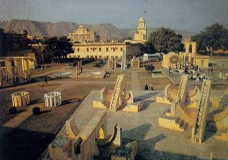
surrounded the wall that time. Next, we visit the Solar Observatory - an
astronomical treasure house, with solar device that give accurate
predictions till date.
Overnight at Naila Bagh Palace (Royal Room)
Day 20: Jaipur / Fatehpur Sikri / Agra (245 Kms) (05 Hrs Drive)
After breakfast, we drive to Agra, stopping at deserted Capital City of
Fatehpur Sikri. This abandoned capital of the Mughals is a perfectly
preserved city at the height of the empires splendour. The city
divided into religious and secular parts has interesting well-sculpted
buildings. From here we continue our ride to Agra.
Upon arrival check into Orient Taj
Rest of the day is at leisure for your independent activities. Car &
Driver will be at disposal for your local visits.
Overnight at Orient Taj (Superior Room)
Day 21: Agra / Delhi (205 Kms) (04 Hrs Drive) Delhi / Departure

Agra
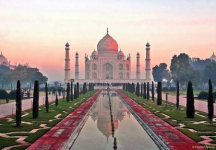
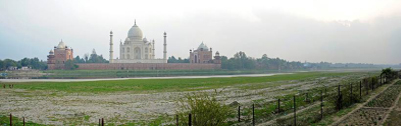
is the city of the Taj Mahal, perhaps the most photographed monument in the
world. However, there is a degree of enigma about the Taj. Once you hear
about a building so much and once you see so many pictures of a building
your expectations are real high; and this is the enigma about the Taj Mahal.
No matter how many pictures you have seen or no matter how high your
expectations are the Taj never lets you down - the unparalleled glory and
beauty of the building surpasses beyond all human imaginations. At sunrise
we visit one of the greatest sights of ones lifetime - Taj Mahal. A
dawn visit to the fabled Taj Mahal to witness the magical effects caused by
the reflections of the changing colours of the rising Sun on this brilliant
white marble building. Later we return back to our hotel for breakfast.
After a leisurely breakfast, we ride to the massive Agra Fort. The elegant
buildings inside reflect an interesting synthesis of Hindu and Central Asian
architectural styles. Built by Emperor Akbar, the maze of the courtyards,
mosques & private chambers of the fort echo the story of the Mughal
Empire. The Moti Masjid & other magnificent buildings reflect the skill
of the ancient Indian architects.
Later, we will drive to Delhi along one of the Indias finest freeways
Home Visit & A Farewell Dinner with an Indian Family : Upon
arrival in Delhi, we would visit an Indian family for an Indian home
experience. The evening is designed to give you a feel and
insight into Indian family life as well as experience typical Indian
hospitality and home made Indian food
After dinner, transfer to the International airport to board your onward
flight
END OF SERVICES
We do hope the flavor of India will remain on your taste buds for all times
to come and hopefully would kindle an indelible fondness for the country and
her people; Thank you for being our guest, and as we say in India Please
Come back Soon