![]() ![]() ![]() |
|
![]() ![]() |
|

Day 02 Chennai
After
breakfast we will proceed on a guided tour of Terumalai Nayak Mahal.
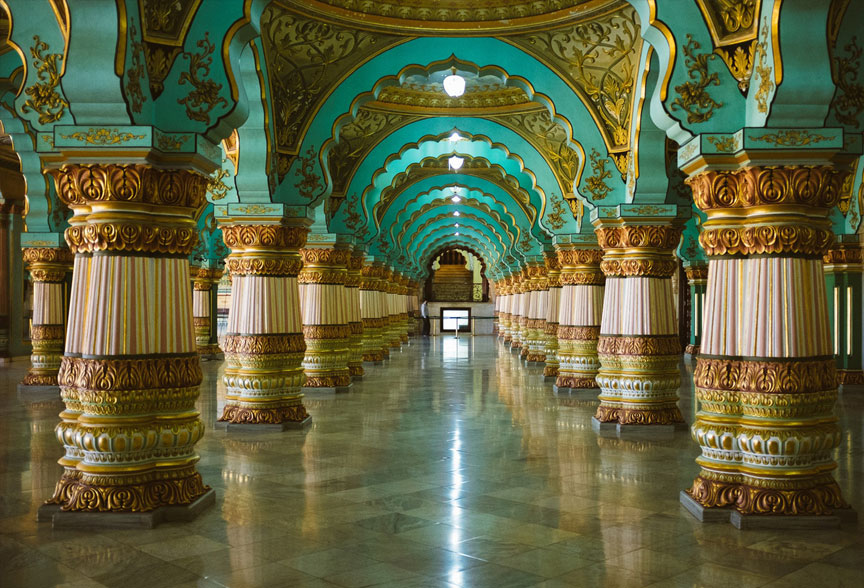
The palace was built in 1636 by Thirumalai Nayakar. A classic example of the
Indo-Saracenic style, the piece de resistance of this Mahal is its carved
dome outsoars without the support of girders or rafters. The stucco
work on its domes and arches is remarkable. The gigantic pillars and
structures represent the amazing architectural mastery of Nayak Kings. The
courtyard and the dancing hall are being the center of attractions. There
are around 248 pillars of each 58 feet toll and 5 feet diameter. Furniture
and utensils used by the kings have been exhibited inside the palace.
Later,
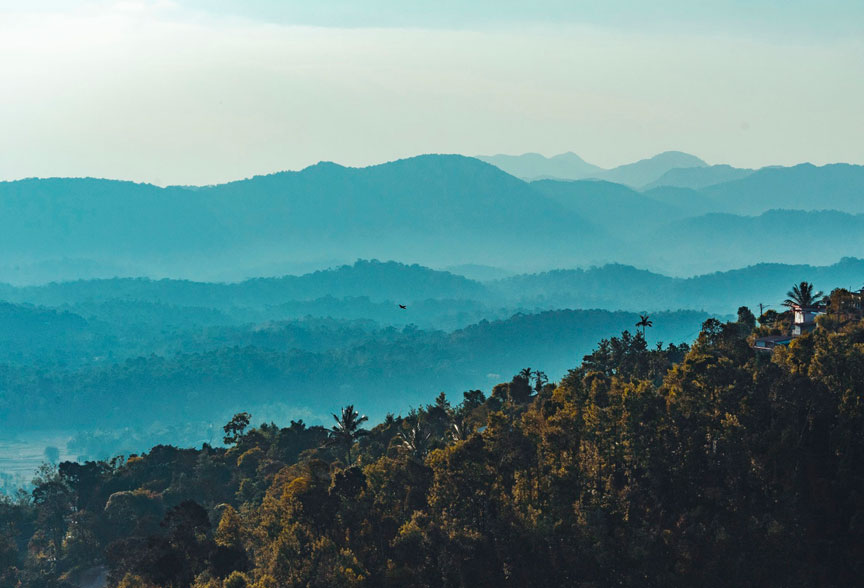
we will drive to Cardamom House, situated in stunningly beautiful
surroundings on a hillside of the Western Ghats over-looking a monsoon
dependent 400-acre lake. Cardamom House is owned and managed by Dr. Chris
Lucas, a retired English physician, ably assisted by 6 Indian staff. All
rooms have either twin or separate double-bedded accommodation, face south,
and have modern western style bathroom facilities en-suite with solar heated
hot water. The water comes from deep bore wells and is potale. With just two
guests to each staff member we can assure that you will, be personally
looked after and "spoiled rotten" during your stay. The meals are
prepared using only the freshest produce purchased daily from the local
markets and the house takes great pride in the variety of food that they
serve.
Following breakfast this morning we would take a short trek inside the
forest. The birdlife comprises of darters, cormorants, kingfishers, great
hornbills (the great Malabar hornbill) and racket-tailed drongoes. The
reptilian population boasts of monitor lizards that can be spotted basking
in the sun, on the rocks along the lakeshore, especially in the cooler
months. Pythons, king cobras, flying lizards, flying squirrels, flying
snakes and to top it all, flying frogs are the other inhabitants of this
amazing sanctuary.
Munnar is surrounded by 30 tea gardens; the atmosphere is fragrant with
extensive tea and cardamom plantations. Tea estates are situated mostly on
the inner slopes of an elevated basin-like plateau. Estate elevations vary
from about 1220 m to over 1830 m. some of the tea plantations, at an
elevation of over 2135-m, are among the highest in the world. It would be
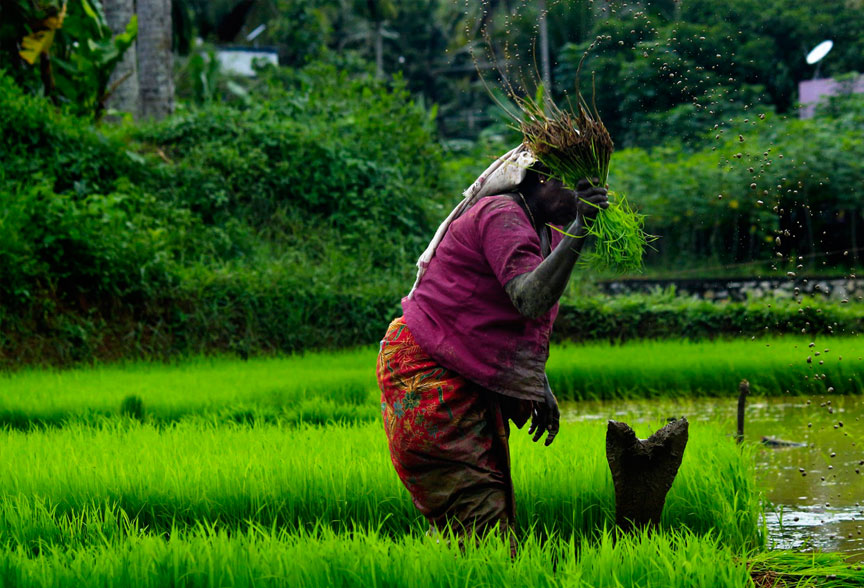
worthwhile to visit some of these tea gardens to witness the plucking of
leaves by women who carry conical bamboo baskets on their back and strapped
to their forehead by a cloth band. The work on the field is all done by hand
and is a fascinating sight. You may also visit the nearby Lockhart Gap,
which provides a panoramic view of the valley and plantation down below. The
enchanting high range of lakes and streams, the low-flying clouds and the
mist-filled valleys cast a magical spell, which lingers long in the memory.
After breakfast we ride to Alleppey for a houseboat experience through the
narrow canals and channels of the backwaters of Kerala.
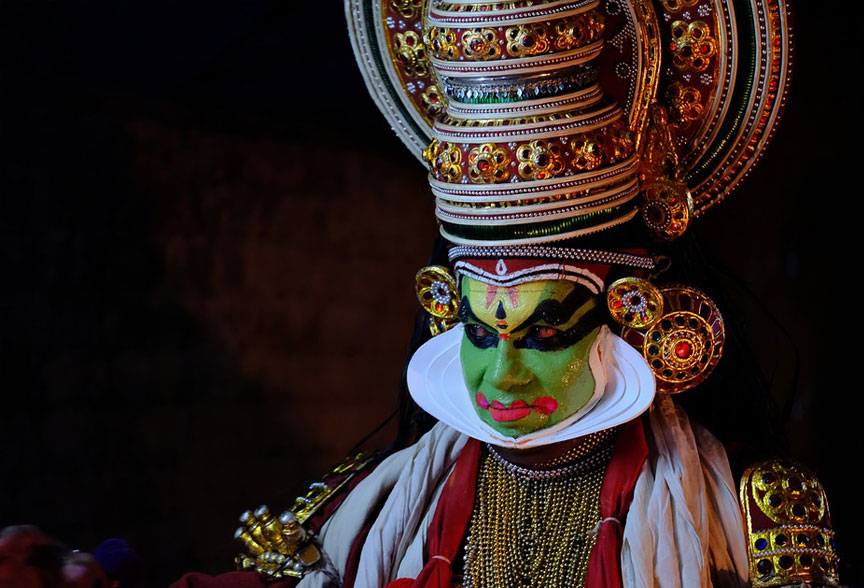
A
special treat awaits us this evening as we proceed to witness the strength
and vigor of Kathakali dance drama, as it enacts episodes from great Indian
epics. The extremely stylized gestures, the elaborate make-up, the masks and
the splendid costumes of these all-male dancers, recreates an incomparable
sense of pageantry.
After
a leisurely breakfast, we proceed on a guided tour of the City. The true
character of the city is to be found in the older parts of the Fort Cochin
area. It more or less exists as it used to be a 1000 years back, when it was
first built. The roads have not been widened because the old haggard
buildings, through patchwork repairs over the centuries, still stand on the
edges. This part of the city reflects an unusual blend of medieval Portugal,
Dutch and English country life grafted on to the tropical Malabar Coast. The
fishing community of Cochin is also very interesting. They ancient
cantilevered fishing nets called Chinese Fishing Nets. The net is fixed to a
pole on the shore. While fishing, the entire net is lowered by a primitive
fulcrum mechanism using long bamboo poles. By the same mechanism the pole is
lifted along with the catch. We will explore the sights of Photographic as
well as cultural interest. We would also visit the 16th century Mattancherry
Palace, also known as the Dutch Palace since the Dutch substantially
renovated the palace in the 17th century. The double storied quadrangular
building surrounds a courtyard containing a Hindu temple. The Central Hall
on the first floor was the coronation hall of the Rajas of Cochin; on
display are their dresses, turbans and palanquins. The most important
feature of this palace, however, is the astonishing murals in the
bedchambers and other rooms, which depict scenes from the Ramayana and other
religious legends. These murals are undoubtedly some of the most beautiful
and extensive anywhere to be seen in India. The unique feature here is the
unexpected and isolated Jewish community, whose origins date back to AD 52.
They are self-contained and have there own Synagogue.![]() |
![]() |
![]() |
|
| ©
Trinetra Tours (P) Ltd.. All Rights Reserved (Terms
of Use) Developed and Managed by IndiaMART InterMESH Limited |
|
|||